Tags:
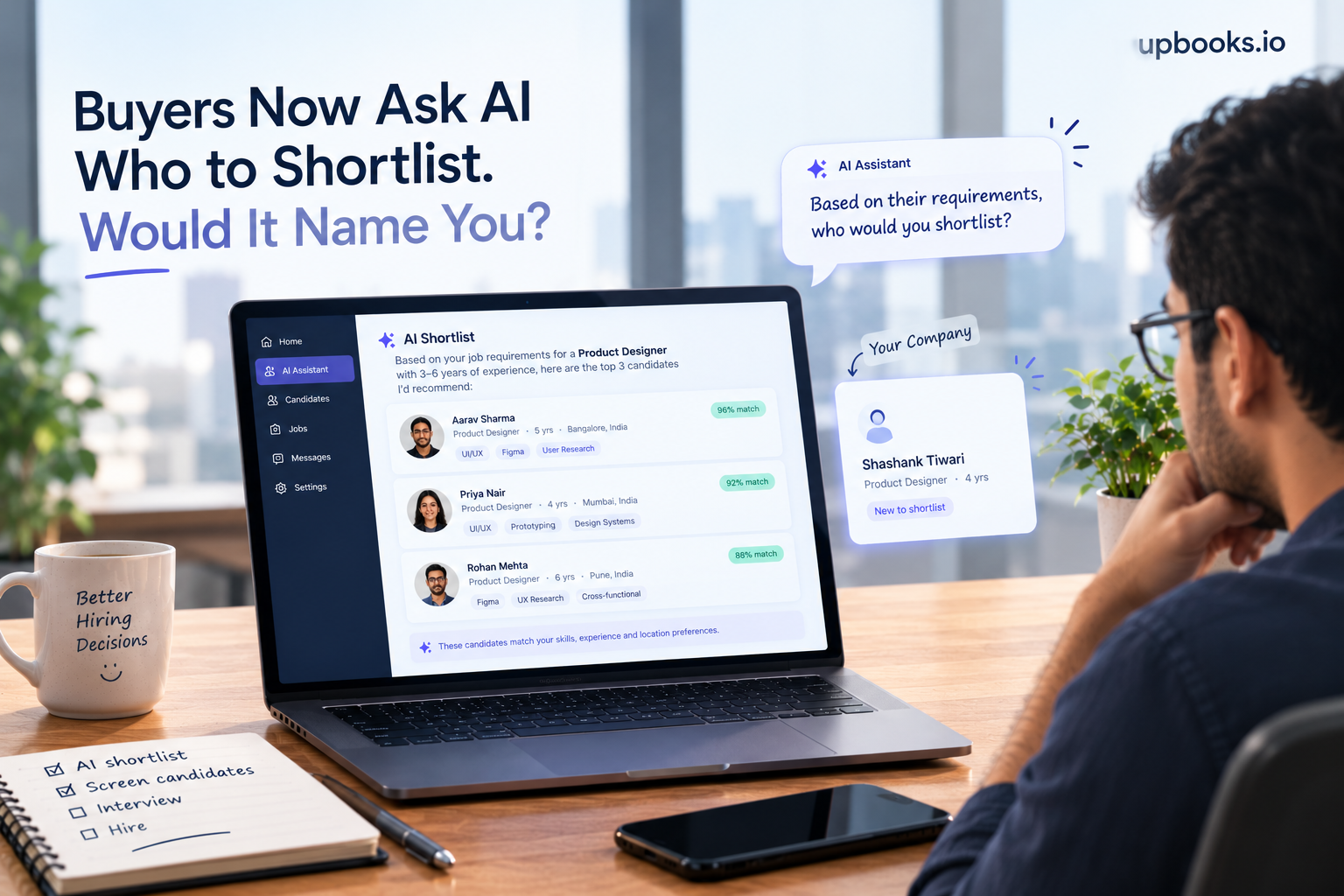
A procurement manager types a question into an AI assistant: which three suppliers should I call for this? The assistant answers in seconds. Three names. The manager calls those three.
If you sell to other businesses, the question is whether yours was one of the names.
Where the research went
G2's March 2026 survey of 1,076 software buyers found that 51% now start their research with an AI chatbot more often than with Google. Eleven months earlier, the figure was 29%. G2's own report adds that 69% of the buyers it polled ended up with a different vendor than they had planned after an AI chatbot's guidance.
These figures describe software buyers surveyed by G2, a company that sells review and AI visibility products. They are not about Indian small businesses specifically, so read them as a direction and not a forecast.
How the AI picks
AI assistants draw on what is written about a business: its own pages, reviews, directories, mentions elsewhere. They tend to favour content that answers the question a buyer actually asked, in the words the buyer used.
A small test by Metricus, a firm that audits AI visibility, found a software company describing itself as a "comprehensive social management" platform was invisible when buyers asked for "social media tools for small business." The product was fine. The description just did not match the question.
People still check
None of this removes the human from the decision. Gartner's survey of 645 B2B buyers found that most still turn to a salesperson to check what the AI told them. The AI narrows the list. A person confirms it.
Try it this week
Ask an AI assistant the questions your buyers would ask. Which names come up? What does it say about you, and is it right? Then read how you describe yourself on your own pages and ask whether a buyer would use those words.
If a buyer asked an AI to name three firms in your category tomorrow, would you be one of them?