#India
Latest articles tagged with India from Upbooks
Categories
27 articles found#India
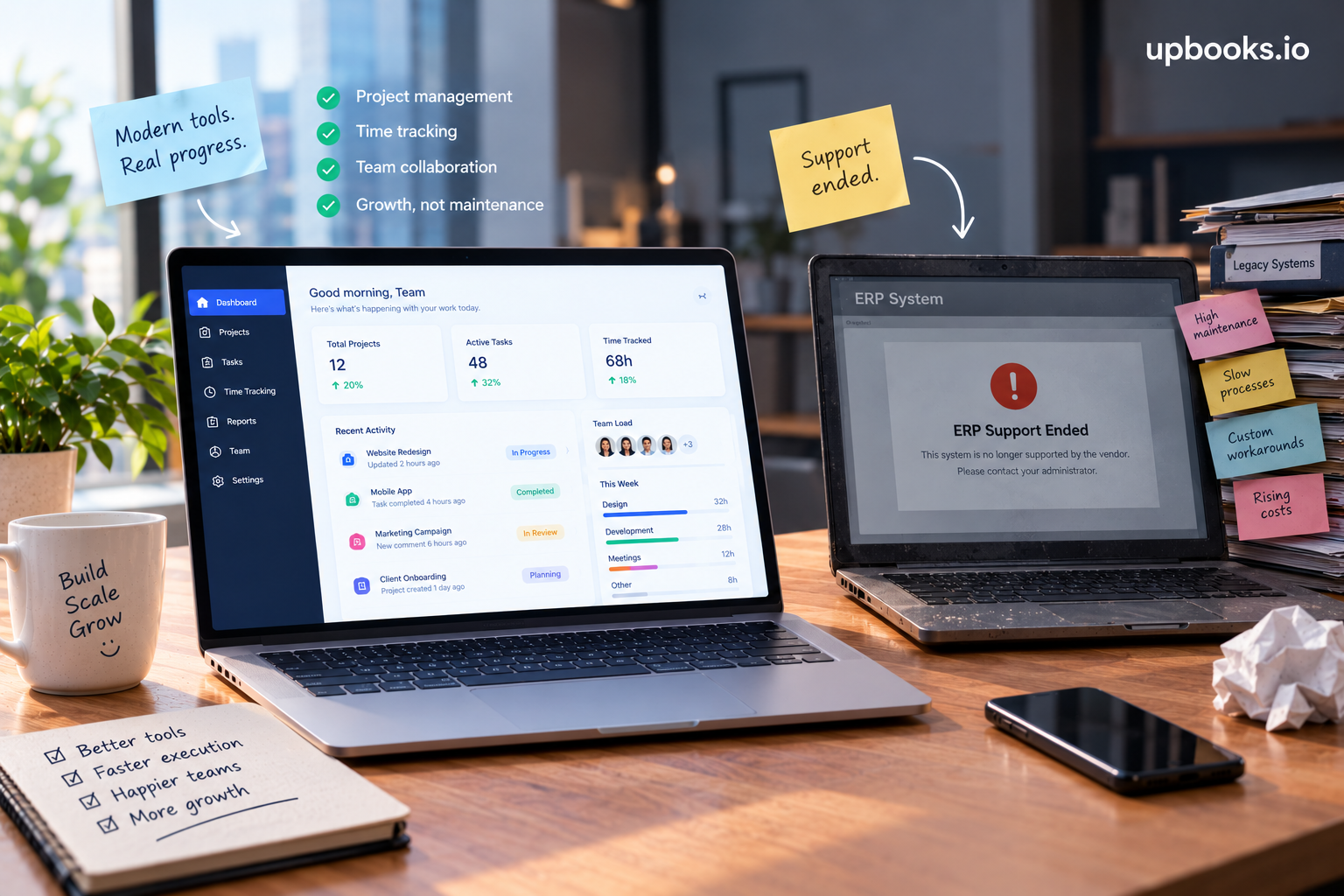
Nothing Breaks on the Day Your ERP Support Ends. That Is the Problem.
When ERP vendor support ends, nothing breaks on the day, which is why it gets ignored. This blog explains support as a ladder, uses SAP Business Suite 7 and Dynamics GP as examples, sets out the questions to put to a vendor, and argues that staying put should be a decision, not a drift.

Teams Got Chat and Video Tools Before They Got Systems
Small businesses went digital in how they talk long before they went digital in how they record work. This blog uses PayNearby's 2024 survey of retail MSMEs and three everyday scenarios to show the gap between chats and calls and a system that holds orders, approvals and stock changes.
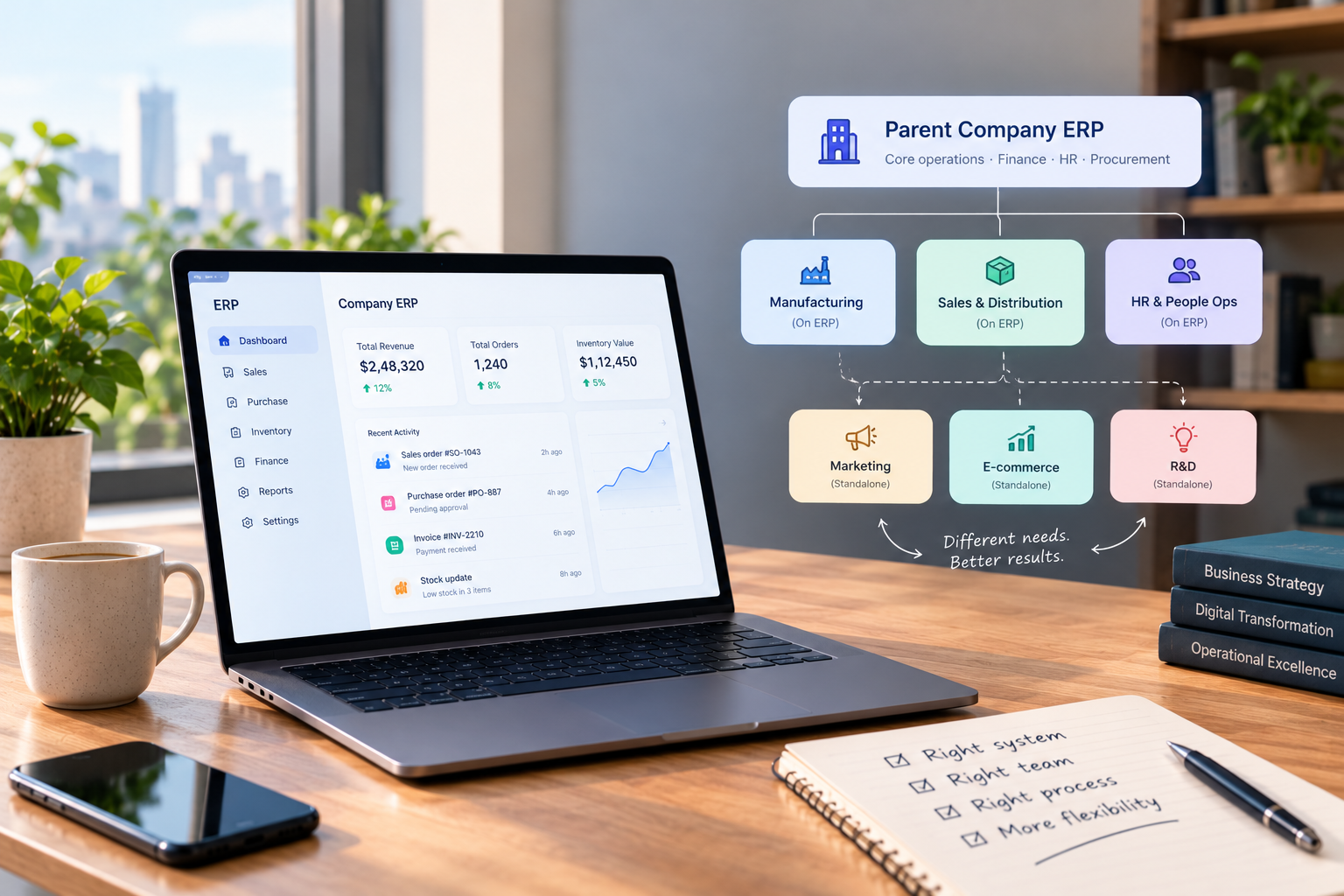
Not Every Business Unit Belongs on the Parent Company's ERP
A business unit that grows fast rarely fits the parent company's heavy ERP. This blog explains two-tier ERP, where a lighter system serves a subsidiary or new unit and passes summary numbers to the core, with the benefits, the trade-offs and a quick test for whether it fits.

Remote Teams Don't Need More Status Meetings. They Need a Record of the Work.
Remote teams call status meetings because the work itself cannot be seen. This blog shows how logging effort against projects and tasks, attaching annotated screenshots and recordings as proof of work, and reading hours against budget in reports gives a team a shared record of where each project stands, using Uplog as the working example.
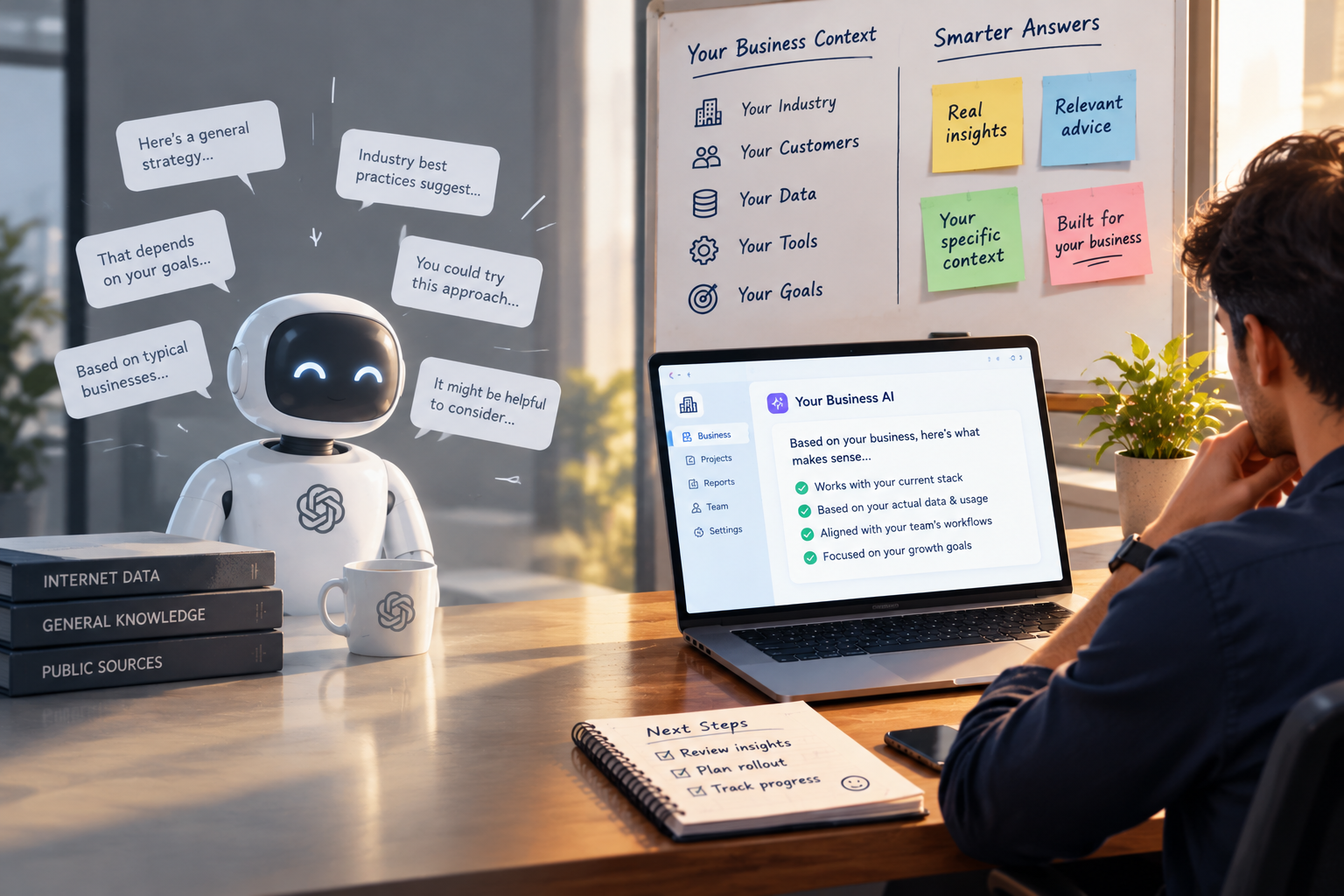
Your AI Doesn't Know Your Business. It Just Sounds Like It Does.
This blog draws the distinction between AI that sounds informed and AI that actually is — explaining why generic AI recommendations can feel confident and correct while being disconnected from a business's real data, and why that gap matters more for small businesses without a team to catch it.
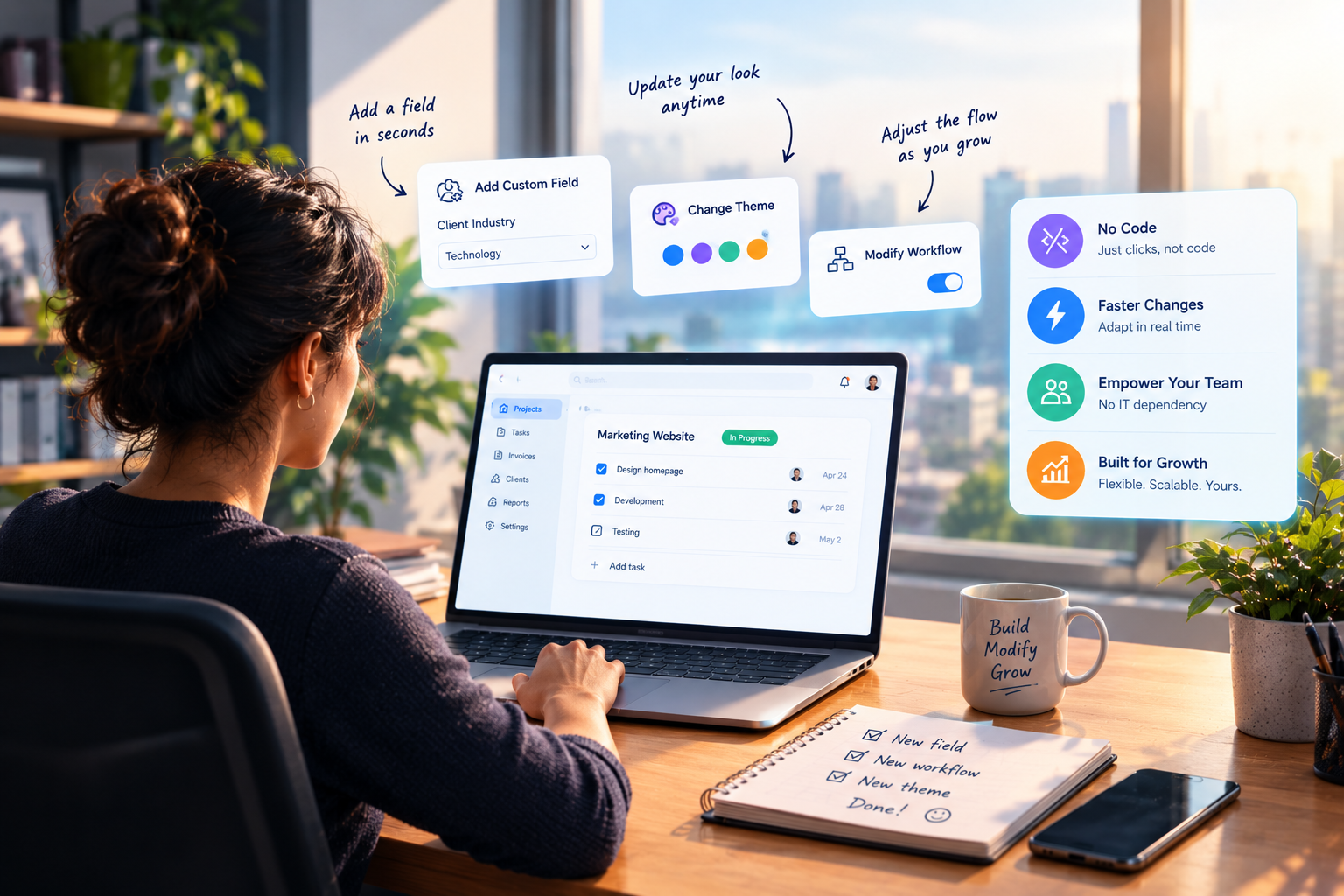
The Best Business Software Doesn't Need a Developer to Change It
This blog explains why low-code/no-code configurability is becoming essential for growing businesses, removing the cost and delay of developer-dependent customization, and uses Upbooks' no-code, fast-setup approach as a real example of this shift in practice.