Upbooks
ResourcesEnterprisePricingContact
Log inGet Started →
Upbooks
ResourcesEnterprisePricingContact
Log inGet Started →
Product
Project ManagementAccounting & FinancePOS & SalesInventoryHRCRMQuikBillingCustomer PortalProcurement
4.2
Great•6 reviews
Solutions
Solopreneurs & FreelancersGrowing BusinessesEnterprisesManufacturersRetailLogistics & DistributionOnline-invoicingAccountingExpense ManagementInventory ManagementHR & Payroll SuiteProject ManagementAutomated WorkflowsOnline PaymentsActivity Monitoring & Access LoggingSecure Centralised Document RepositoryAdvanced ReportsEmail Reminders
Resources
BlogDocumentationHelp CenterAPI DocsComparisonDownload IntroAccount & FinanceBoards by UpbooksConstructionCustomers & Sales ManagementEcommerce by UpbooksHRMS by UpbooksLeadTrackr by UpbooksManufacturing and OperationQuikBilling by UpbooksVendors & Purchase Management
Company
AboutCareersContactFAQGetting Started GuideVideo TutorialsPrivacyTermsRefund and Cancellations

© 2026 Upbooks™ — All rights reserved. The new age ERP which is AI-ready. AI-powered business productivity suite.

A productivity suite by Scrrum Labs

Back to Blog
Nothing Breaks on the Day Your ERP Support Ends. That Is the Problem.
Business, Technology, Business Operating System

Nothing Breaks on the Day Your ERP Support Ends. That Is the Problem.

Radhika Mandhar
October 26, 2026
2.5 min read

Tags:

#ERP End of Support#Legacy ERP#ERP Migration#ERP Lifecycle#SAP#Dynamics GP#North America#Asia-Pacific#India#Europe#B2B#B2C#SaaS

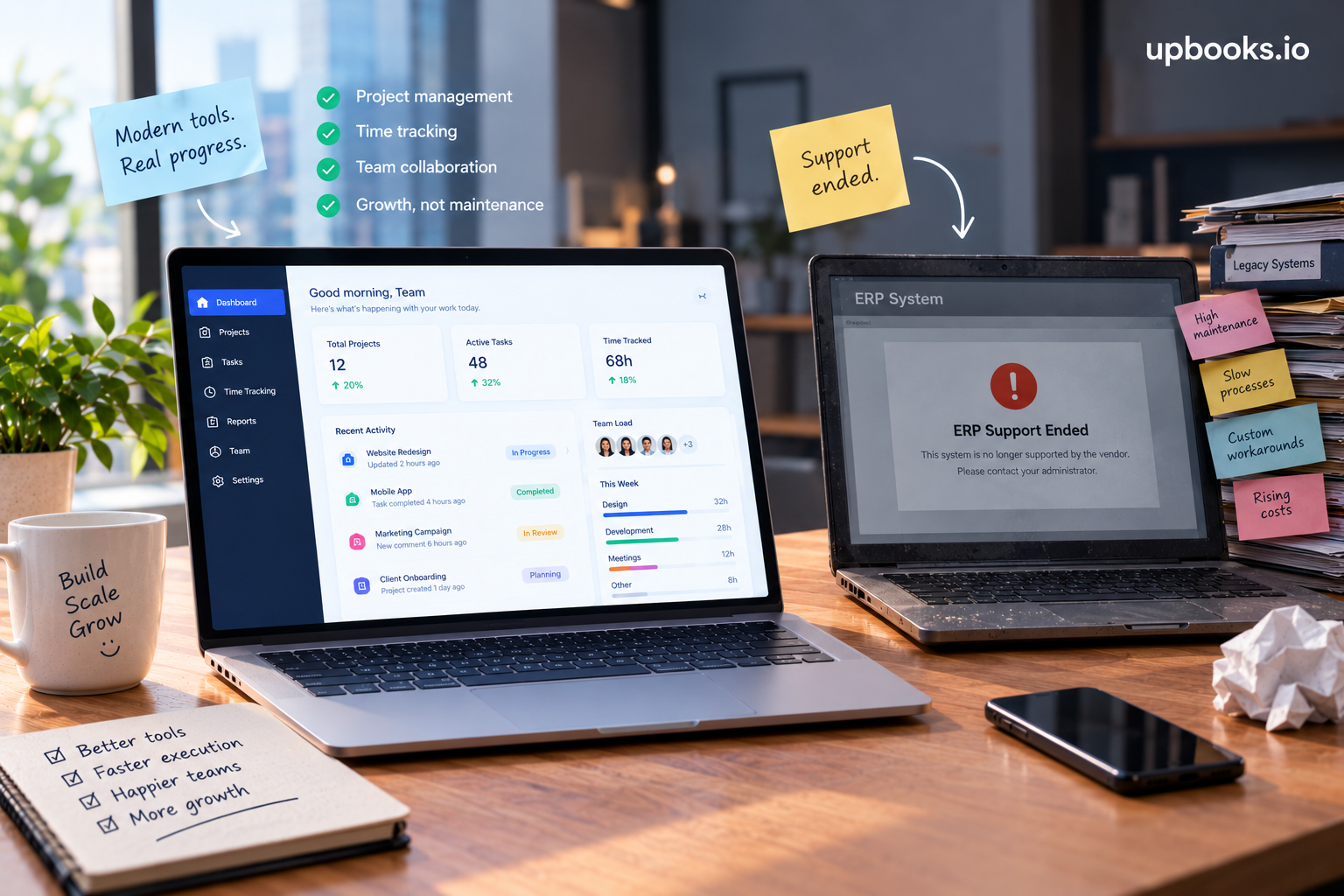
A notice arrives from the ERP vendor. It carries a date, a few paragraphs about a modern successor, and a link. Someone in finance reads it, agrees it matters, and files it under later.

That is a reasonable reaction. On the date itself, nothing happens. The software opens, the invoices print, the month closes. That quiet is what makes end of support so easy to ignore.

Support is a ladder

What ends is a vendor's obligation, and it ends in steps. Take SAP's older Business Suite 7, which includes SAP ERP 6.0. Mainstream maintenance for its core applications ends on 31 December 2027. After that, customers can pay for extended maintenance, available until the end of 2030 at a premium over the standard fee, or move to a customer-specific arrangement. Microsoft has set 30 September 2029 as the end of support for Dynamics GP. Dates are as announced at the time of writing, and vendors do revise them, so check with yours.

In each case the vendor stops adding features and fixes on a schedule. What remains costs more and offers less.

What builds up quietly

A system that is no longer being developed drifts away from the world around it. Three questions are worth putting to your vendor in writing. Will it still receive updates when tax or statutory rules change? Will the tools connected to it keep working with it? And who inside the business still knows how it is configured?

None of these has a dramatic answer on the date. They tend to get harder to answer with each year that passes after it.

Staying can be a decision

None of this means moving on the vendor's schedule. Deloitte's So Chan, speaking to CIO, described these deadlines as more of a prompt to begin the conversation than a real threat. Gartner has estimated that four in ten SAP ECC customers will still be running it for key business areas in 2030, and it describes third-party support as a viable route for those who stay.

There are good reasons to stay put: a system that works, a year with other priorities, a migration that is not yet affordable.

The part that takes time

Whichever way it goes, the lead time is long. CIO reports that a cloud migration at enterprise scale can take 18 to 36 months and cost millions. A smaller business has a smaller job, but the sequence is the same: decide, plan, move the data, retrain the people. Starting the conversation early is cheap. Starting it with a year left is not.

The question underneath

The real question is not whether your vendor has set a date. It is whether staying on the system is a decision someone made, or something nobody has decided yet.

Related Articles

How AI Has Transformed the IT Product-Based Industry
Technology / Artificial Intelligence / Product Development

How AI Has Transformed the IT Product-Based Industry

Artificial Intelligence is no longer a futuristic concept—it is actively reshaping the IT product-based industry. From smarter product development to personalized user experiences, AI is helping companies innovate faster, reduce costs, and stay competitive in a rapidly evolving digital world.

March 26, 20268 min read
SAP ECC Support Ending in 2027: What It Really Means for Indian Businesses
Technology, Business OS

SAP ECC Support Ending in 2027: What It Really Means for Indian Businesses

SAP ECC support ends in 2027. Learn what it means for Indian businesses, ERP transformation, compliance, operational scalability, and future-ready enterprise technology strategy.

May 26, 20268 min read
Your Business Has a CRM, a Payroll Tool, an Invoicing App, and a WhatsApp Group. That Is Not a Stack. That Is a Workaround.
Technology

Your Business Has a CRM, a Payroll Tool, an Invoicing App, and a WhatsApp Group. That Is Not a Stack. That Is a Workaround.

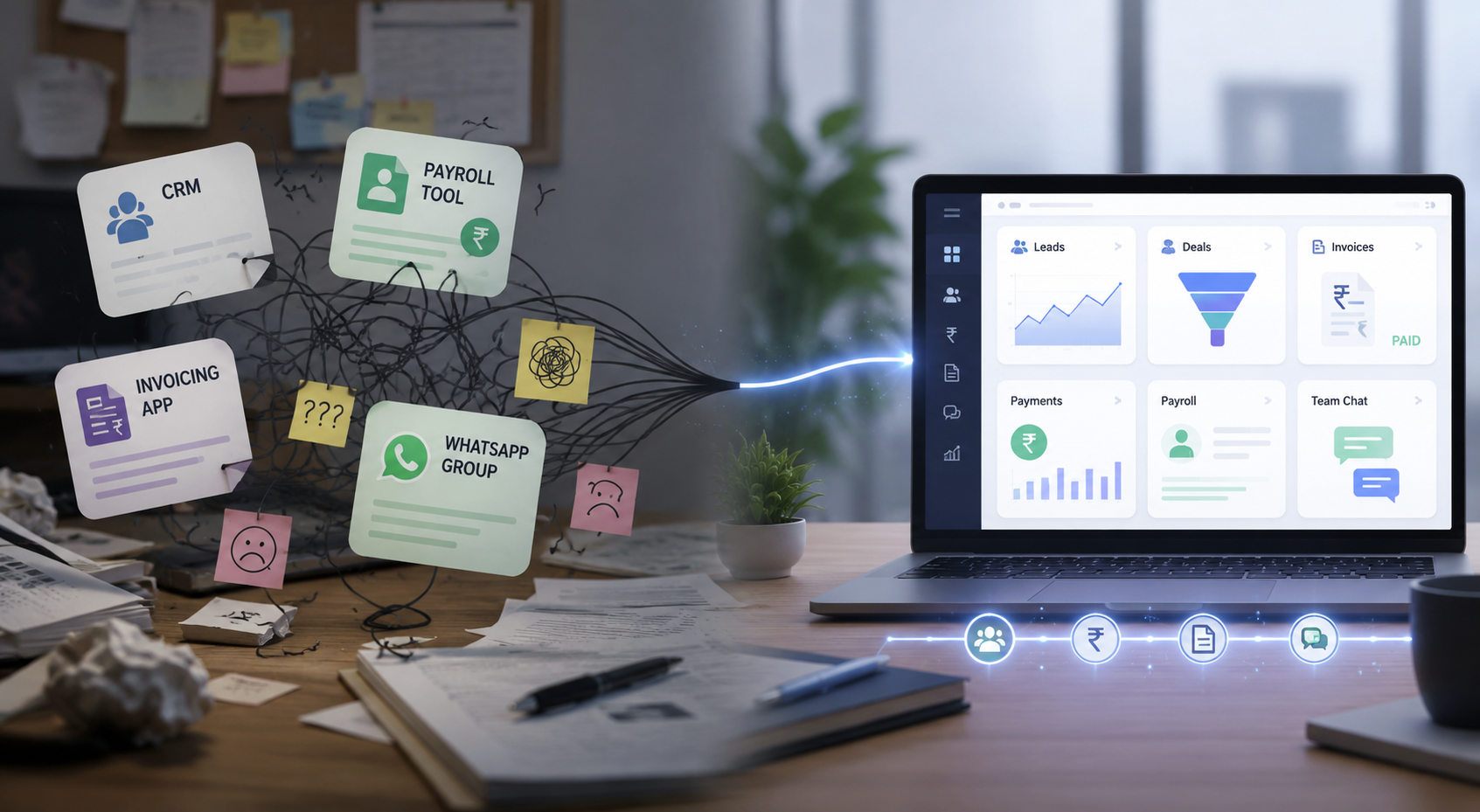
Most growing businesses run on a collection of disconnected tools held together by spreadsheets and WhatsApp. This blog names the pattern — tool sprawl — explains how it happens, what it costs in operational drag and slow decisions, and what the right question is before buying anything new.

June 3, 20264 min read

Ready to Transform Your Business?

Discover how Upbooks can help streamline your operations and drive growth.

Start Free TrialContact Sales