Tags:
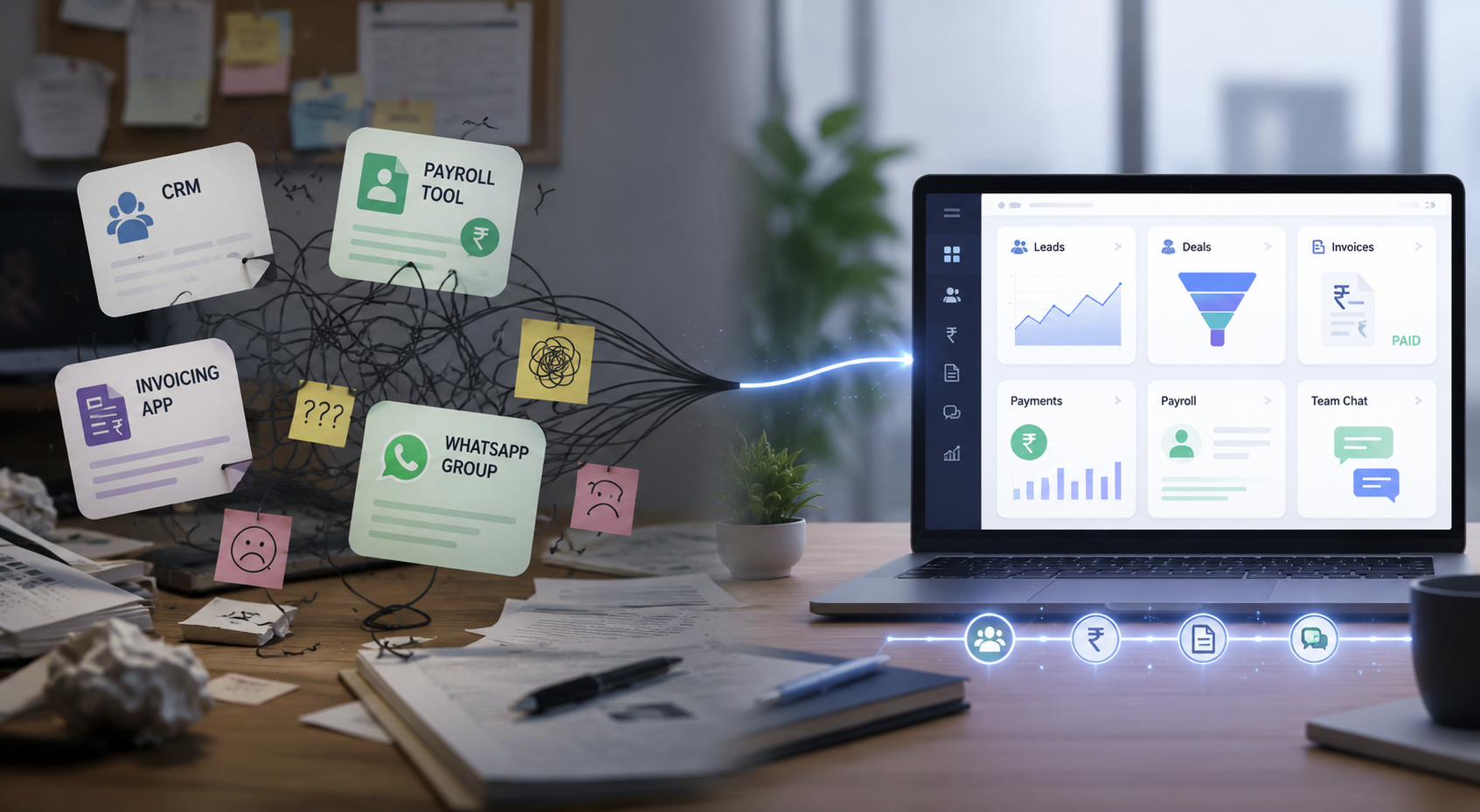
For a long time, changing how your business software worked meant calling someone. A developer, a consultant, an IT ticket that sat in a queue for two weeks before a simple field got renamed or a new approval step got added.
That's increasingly no longer how it has to work.
What "low-code/no-code" actually means
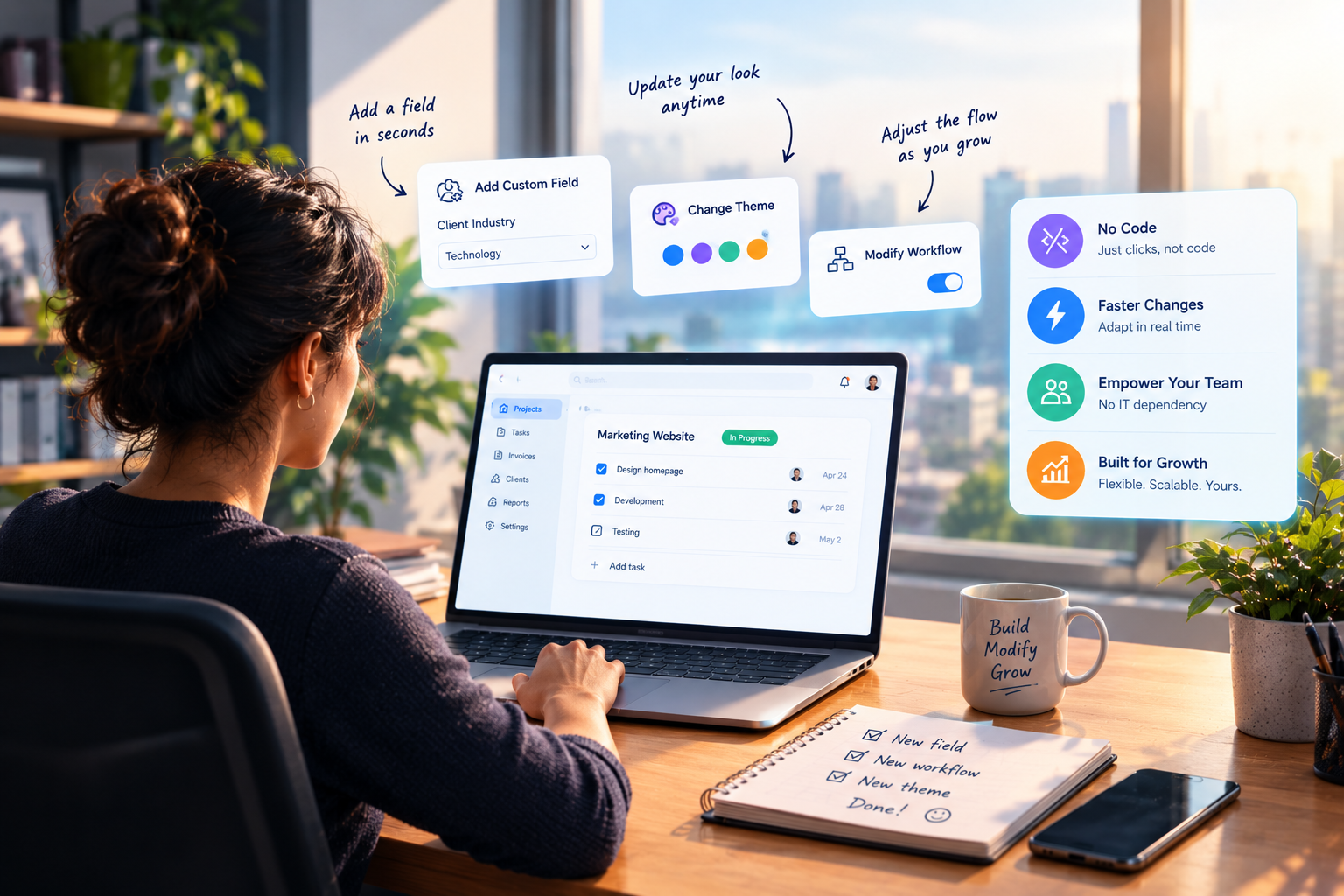
Strip away the jargon, and the idea is simple: business users — not developers — should be able to configure how their software works. Add a new field to a form. Change an approval workflow. Adjust what shows up on a dashboard. All without writing a line of code or waiting on someone else's schedule.
This has quietly become one of the more significant shifts in business software generally. Analysts increasingly point to this kind of flexible, user-configurable design as a defining factor in how companies choose new software going forward — not because it's a nice feature, but because rigid, developer-dependent systems create a real, ongoing cost that compounds over time.
Why this actually matters, beyond convenience
The old, developer-dependent model has a hidden tax on it that's easy to underestimate. Every small change — a new field, a tweaked workflow — becomes a mini-project: a request, a queue, a wait, sometimes a cost. Multiply that by every small adjustment a growing business needs over a few years, and "customization" quietly becomes one of the most expensive, slow-moving parts of running the software at all.
A system a business can configure itself removes that tax entirely. A change that used to take two weeks and a developer ticket takes ten minutes and whoever actually understands the process that needs adjusting — usually the person doing the work, not someone translating their request into a technical specification.
What this looks like in practice
A retail business wants to add a new field to their sales order form — say, tracking which sales channel a customer came from. In a traditional, code-heavy system, that's a developer request, a testing cycle, and a deployment window. In a configurable system, it's the sales manager adding the field themselves, in the same afternoon they realized they needed it.
That gap — days or weeks versus the same afternoon — adds up to something significant over a year of a growing, changing business. It's the difference between software that keeps pace with how the business actually evolves, and software the business quietly stops adapting to use, because every change feels like too much friction to bother requesting.
Why this is especially relevant for small businesses
Large enterprises can often absorb the cost of a dedicated IT team fielding customization requests. Small and mid-sized businesses usually can't — there's no developer on staff, and hiring one just to tweak workflows isn't a realistic option. For this segment specifically, the ability to configure software without code isn't a convenience. It's often the difference between a system that actually fits how the business works, and one the business slowly abandons in favor of spreadsheets and workarounds, because getting it changed was never worth the hassle.
This is a real part of how Upbooks is built. Its "zero upfront cost, no long contracts, no heavy implementations" positioning isn't just a pricing pitch — it reflects a system designed so a business can configure workflows, forms, and processes directly, without waiting on a developer or a lengthy implementation project, the same friction that traditional ERP customization has always created.
The real shift worth noticing
The old assumption was that flexibility had to come from a developer translating a business need into code. The businesses benefiting most from this shift are the ones that stopped accepting that as a given — and started expecting their software to bend to them directly, on their own timeline, without a queue in between.