Tags:
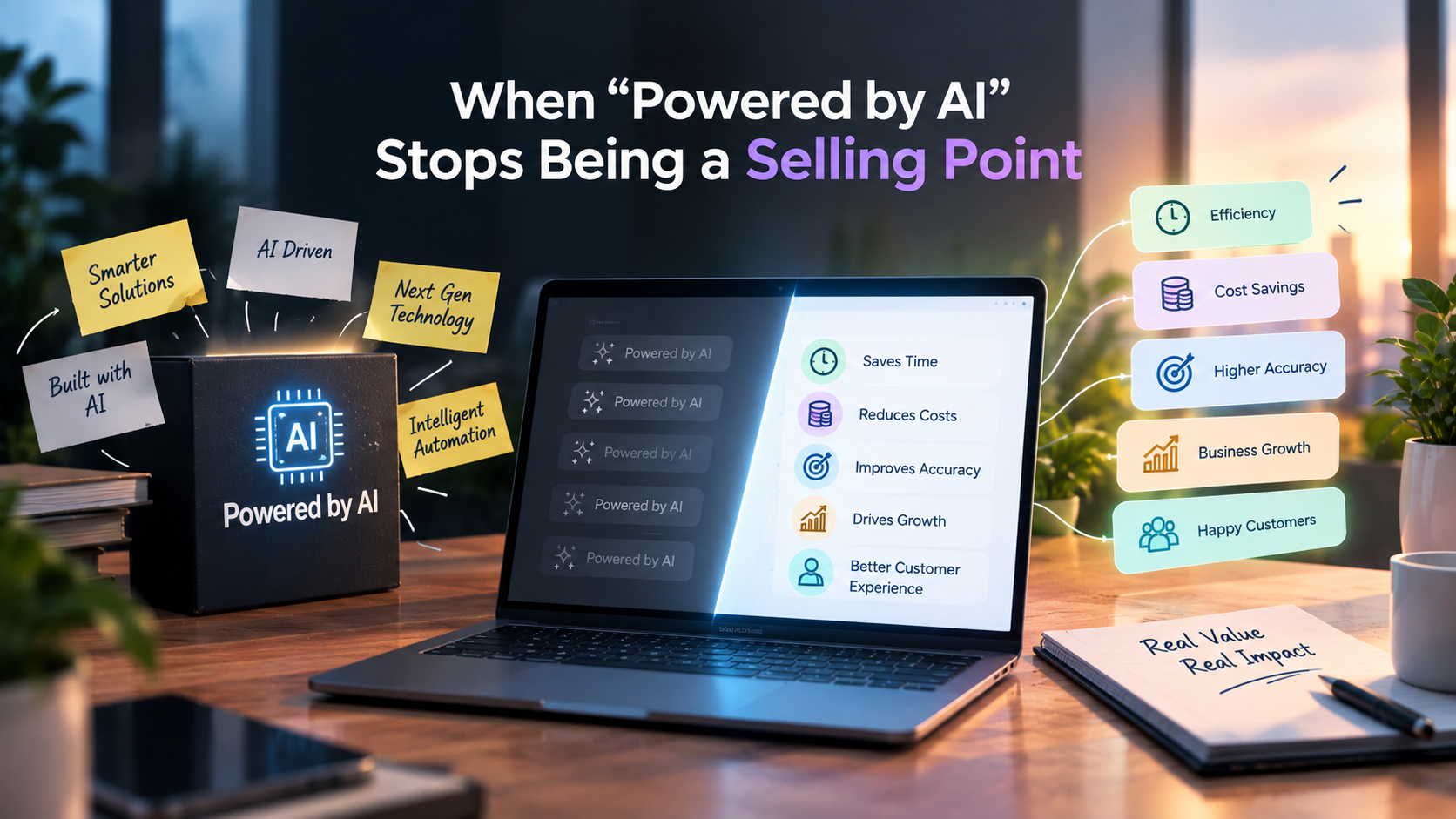
There was a moment, not long ago, when slapping "AI-powered" on a product description meant something. It signaled innovation. It justified a premium. It made a business tool feel like it was ahead of the curve.
That moment is ending.
The shift from differentiator to default
Industry forecasts are blunt about where this is headed: the overwhelming majority of business software is expected to include generative AI and predictive features as a standard part of the product, not a paid add-on or a bragging right. Within a few years, asking "does this tool have AI?" will feel a bit like asking "does this tool have an internet connection?" — a question that assumes the answer is obviously yes.
That's a meaningful shift for how businesses should be evaluating software going forward. When every vendor claims an AI feature, "has AI" stops being useful information. It tells you almost nothing about whether the AI is actually good, actually integrated, or actually going to help.
Why this changes the real question to ask
For the past few years, a fair amount of software marketing has leaned on the mere presence of AI as the pitch. That's about to stop working, because the presence of AI will no longer be rare or noteworthy — it'll be assumed.
What replaces it as the meaningful question isn't "does it have AI," but two sharper ones: how well is that AI actually connected to real, relevant data, and how much of the routine work does it genuinely take off someone's plate versus just decorating the interface with a chat box.
A tool can have AI and still be mediocre — a bolted-on chatbot with no real access to a business's actual numbers. A tool can also have relatively modest AI and still be genuinely useful — an automation that reliably handles one specific, well-defined task, day after day, without anyone thinking about it.
What this means for evaluating tools going forward
As "AI-powered" stops being a meaningful filter on its own, a few sharper questions become worth asking during any software evaluation:
Does the AI work with this business's actual data, or generic assumptions? Does it take real action, or just make suggestions someone still has to act on manually? Would removing the AI feature actually change how the day-to-day work happens — or would nobody notice if it quietly disappeared?
Those questions cut through the marketing noise in a way "does it have AI" no longer will.
The upside of this shift
None of this is bad news, despite the slightly deflating framing. A market where AI is assumed rather than exceptional is, in a real sense, a maturing market — vendors will increasingly have to compete on how well their AI actually works, not on the novelty of having it at all. That's a healthier basis for comparison than it's been for the past couple of years.
The businesses that benefit are the ones that stop being impressed by the label, and start asking what the AI actually does with their day.